

Two weeks before the NFL trade deadline, the Seattle Seahawks had already won by acquiring former Indianapolis Colts guard Quenton Nelson. The San Francisco 49ers followed that move up by trading for another former Colts player, defensive tackle DeForest Buckner. Following that move, the Los Angeles Rams did not move.
Getting Myles Garrett back in Week 9 was huge, and he played like it, and perhaps his return did both the Seahawks' and 49ers' trades as far as talent and player impact go. Yet it remains a little surprising that the Rams didn't try to trade for a wide receiver given their current injuries, as is the case for the Seahawks, but not for injury-related reasons.
Both teams needed wide receiver help before the deadline, and nothing has changed since. For Seattle, they will be forced to ride Jaxon Smith-Njigba for as long as he'll hold up. For Los Angeles, they're forced to trust in Puka Nacua's health when he returns. That said, as far as wide receiver trades that didn't happen go, who came out the biggest losers? The Rams, or the Seahawks?
The Seattle Seahawks emerged from the trade deadline the winners over the Rams despite not improving their WR room
Both the Seahawks and the Rams are dealing with wide receiver injuries—Nacua and Davante Adams for the Rams; Rashid Shaheed for the Seahawks. Nacua is expected back in a few weeks, and if Adams's recovery continues on track, he could return around the same time after rupturing his hamstring in Week 6.
As for the Seahawks, Shaheed's return has no timetable, so the offense will have to rely on Smith-Njigba, Cooper Kupp, and Tory Horton for now. Now, it would have made sense for the Rams to pursue a wide receiver trade given their injuries and current standing in the NFC West.
That said, it also makes sense why they didn't. A combination of depleted draft capital and salary cap limitations likely played a part. Still, the Rams not trying anything is a massive risk, hoping Matthew Stafford and the offense can hold up without their two biggest playmakers.
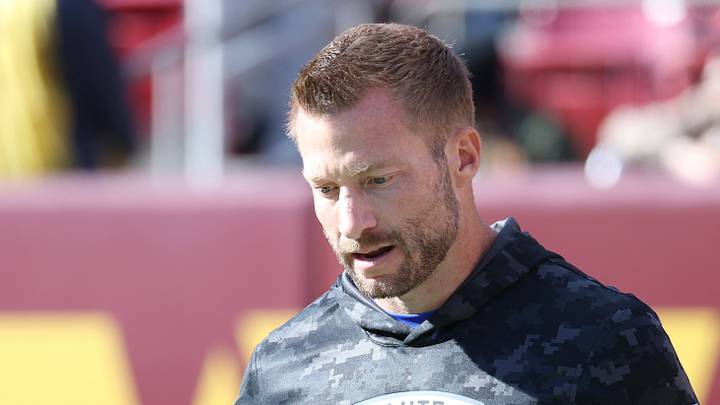
It's not as if Sean McVay's team has any breathing room, because they don't. The Rams are just 5-4, same as the Seahawks, whom they won't meet twice until the final three weeks of the season. They can't afford to drop games thanks to a depleted offense. For their sake, finding some relief at wide receiver would have helped, even if only for three or four weeks.
On Seattle's side, they missed out on Josh Downs, but they had other options, which makes it surprising that they didn't bring someone in either, as the Rams did. An argument could be made that Seattle should count themselves lucky that Smith-Njigba wears their jersey.
At the end of the day, while both teams could, and should have, made a wide receiver trade, even though the Rams had more off-field reasons not to, Seattle came out as the winners here, and the Rams, the losers, for on- and off-field reasons.
Of the two teams, the Rams needed more help but couldn't find it, or decided not to look. Seattle couldn't find the help either, but they have what the Rams don't right now: a No. 1 target.
 Add us as a preferred source on Google