

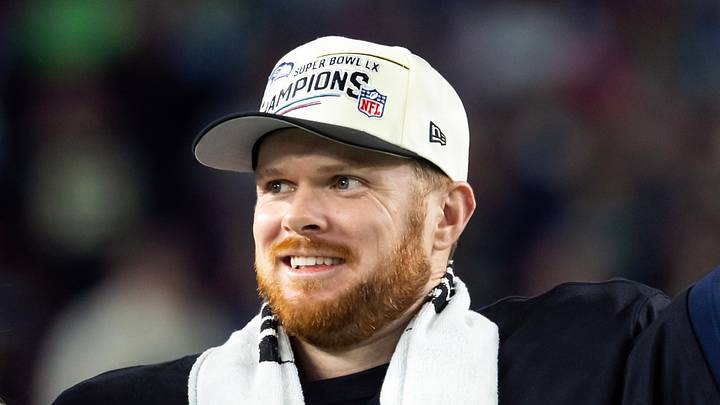
If you were to simply look at the major stats from last year’s Super Bowl, you might think the Seattle Seahawks and New England Patriots played a pretty competitive game. The two teams had virtually identical total yardage numbers.
Seattle ran the ball better; New England – at least on paper – threw it better. Yards per play, which is often a good barometer of which side was better across the board, was also virtually even.
Of course, those statistics would be lying. Seattle dominated the game. Other key numbers show why. A six-to-one advantage in sacks. Almost twice as many rushing yards. The Seahawks forced three turnovers while committing none. That, in large part, explains what really happened on the field.
What to expect when the Seattle Seahawks play the New England Patriots in Week 1
As the two squads prepare to open the 2026 season on Wednesday night, are we likely to see the same type of contest? How similar or different are the Seahawks and Patriots teams that squared off last February?
The short answer is “no – Wednesday is likely to look nothing like the Super Bowl game.” Though most of the key players return for both sides, there are a lot of new faces that will no doubt change the on-field dynamic.
Seattle fans are all too aware of the Super Bowl contributors who will not be wearing a Seahawks uniform on Wednesday. It begins with the game MVP Kenneth Walker. Coby Bryant and Riq Woolen are gone from the secondary.
One of their expected replacements, rookie Bud Clark, is out for the season. Nick Emmanwori, such a crucial part of Mike Macdonald’s complex attack, is questionable for the opener.
The Seahawks will still field a formidable squad. But what can they expect from a revamped Patriot club? Here are the most significant changes New England has undergone since the teams met in Super Bowl LX.
Offense
The massive change has come at wide receiver. In the Super Bowl, the Patriots' outside receiving threats were Mack Hollins and Kayshon Boutte. This season, they will be replaced by AJ Brown and Romeo Doubs.
That’s going from 79 catches, 1,101 yards, and eight touchdowns last season to 133 catches, 1,727 yards, and 13 touchdowns this year. These receivers will challenge a suddenly suspect Seattle defensive backfield in ways the 2025 Patriots could not.
The Pats also have Hunter Henry at tight end and DeMario Douglas in the slot returning as reliable options if the Seahawks are able to slow the downfield passing game. Rookie tight end Eli Raridon may not be ready for a big role yet, but he is still a dangerous player stepping into the TE2 role filled by Austin Hooper last year.
Perhaps even more important changes – at least for Wednesday night – are on the Pats' offensive line. That is where the Super Bowl was decided last year. Seattle’s defensive front simply overwhelmed New England.
Though New England will run out of the five starters from last year, the arrival of Alijah Vera-Tucker should help lock down the left guard spot. It also allows last year’s left guard, Jared Wilson, to move to center, where he played in college. Wilson, center Garrett Bradbury, and left tackle Will Campbell were no match for Seattle’s front seven in February. They should be better this year.
The Patriots will be without in-line blocking tight end Julian Hill on Wednesday. But they have added an outstanding blocker in fullback Reggie Gilliam, who should help the Pats run the ball better than they did in the Super Bowl.
That, along with more potent outside options, should make Drake Maye’s life easier. He was overmatched in February. This year, he enters with more experience and a better supporting cast.
Defense
New England’s defense was not too bad against Seattle’s offense last year. They struggled to stop the run, but they played well at key moments, holding the Seahawks to field goals throughout much of the game. The final Seattle score came on a turnover. The Pats defense was not in control of the game, but they played well enough to win if only their offense could have functioned.
They return Milton Williams and Christian Barmore in the middle of the line, with Robert Spillane and Christian Elliss behind them at linebacker. That core will have to perform better against Seattle’s running attack if they expect a different outcome this year. They have added the ageless veteran Kevin Byard to the back end of the defense, and he should be a big asset against the run as well.
The question mark from New England concerns their edge rushers. Harold Landry begins the year on the PUP list, and K’Lavon Chaisson is now a Washington Commander. They will be replaced on Wednesday by promising youngster Elijah Ponder and Seattle’s old friend Dre’Mont Jones. I imagine Jones would like nothing more than to sack Sam Darnold in front of the 12.
New England will have a few other changes that shouldn’t have much impact on the game. Veteran punter Mitch Wishnowsky will be filling in for the injured Bryce Baringer. And, technically, the Patriots have a new defensive coordinator this year in Zak Kuhr. But Kuhr was the de facto DC last year after health issues forced Terrell Williams to step back from the role.
Kuhr now has plenty of experience designing defenses and calling plays. He will be matching wits with Seattle's new offensive coordinator, Brian Fleury, who is new to both roles this year.
In the end, despite the Patriots' new receivers and Seattle’s changes on both sides of the ball, this game will likely come down to what determines most NFL outcomes - who will control the lines.
If Seattle can still run the ball against the Patriots' front, it will be tough for New England to change last year’s outcome. And if the Patriots' offensive line doesn’t slow down Seattle’s dynamic front seven, Drake Maye could be in for another long night.
But this is a different New England team out for revenge. If they are better on both lines, Wednesday could be a much closer contest than we saw last season.
 Add us as a preferred source on Google